

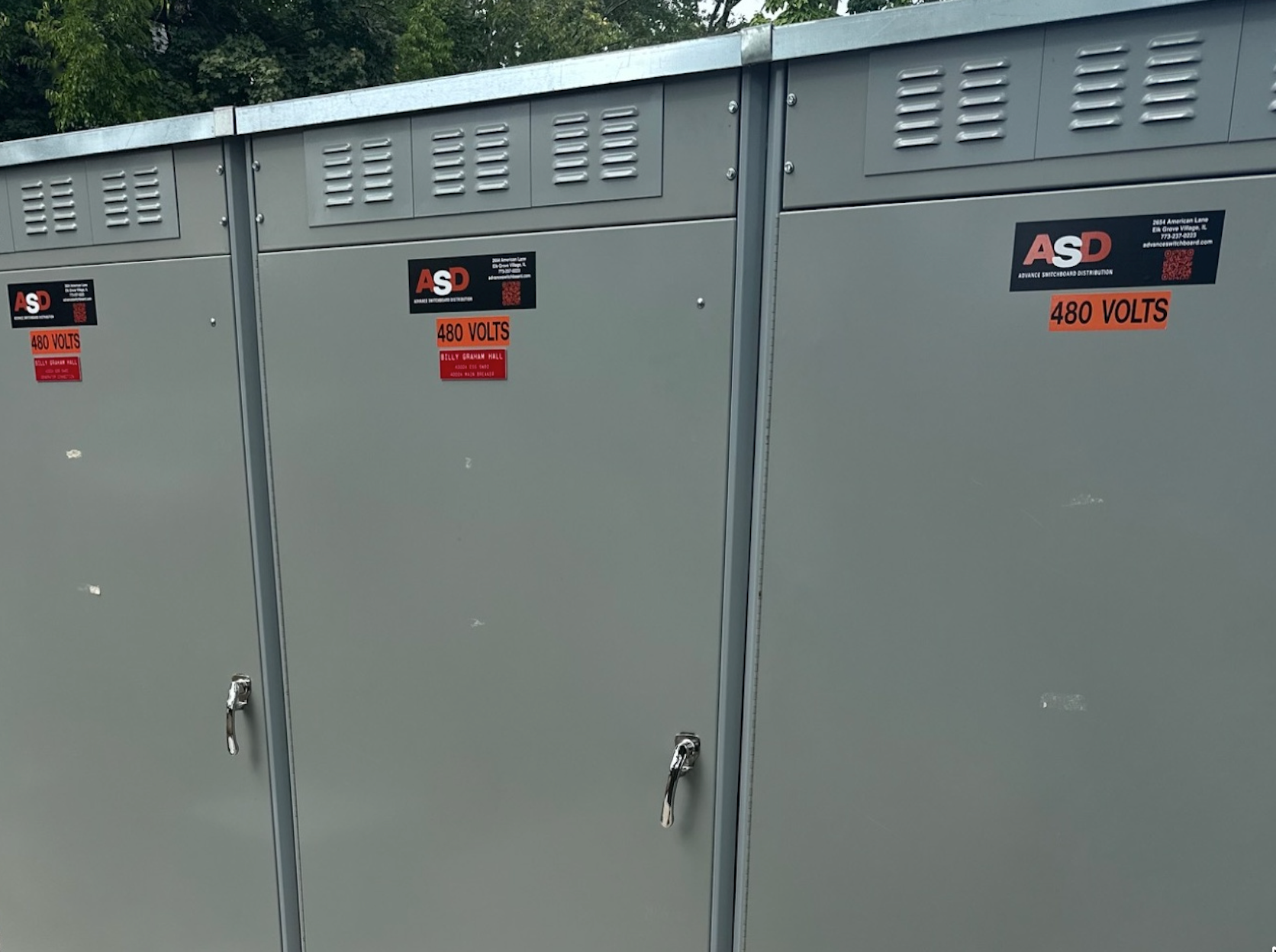
What Does It Take for a Switchboard to Meet UL 891?
Switchboards are typically the first major distribution equipment a building’s electrical system relies on. Power enters the building, lands at the switchboard and is then distributed to feeders that supply the rest of the system.
Because of that role, switchboards must meet specific construction and safety requirements defined by UL 891.
A switchboard carrying a UL 891 listing has been designed, assembled and tested to confirm it can safely handle the electrical loads and operating conditions expected in commercial and industrial systems.
What the Standard Covers
UL 891 applies to low-voltage dead-front switchboards used in building power distribution. The standard evaluates how the complete assembly performs under normal operation and fault conditions. Testing focuses on areas such as:
• Electrical spacing and insulation
• Bus bar construction and bracing
• Integration of overcurrent protection devices
• Heat generated during operation
• Structural integrity of the assembly
These requirements confirm that the switchboard can safely distribute power while maintaining the stability of the electrical system.
Why This Matters on the Job
Switchboards are often one of the first pieces of equipment reviewed during submittals and inspection because they sit at the center of the distribution system.
If the equipment does not meet the required listing, the issue usually appears during equipment review or inspection, which can lead to equipment changes or project delays.
Understanding what UL 891 requires helps confirm the equipment is appropriate for the system before installation begins.
Bottom Line
When a switchboard meets UL 891, it confirms the equipment has been tested to safely distribute power at the main point of the building’s electrical system.