

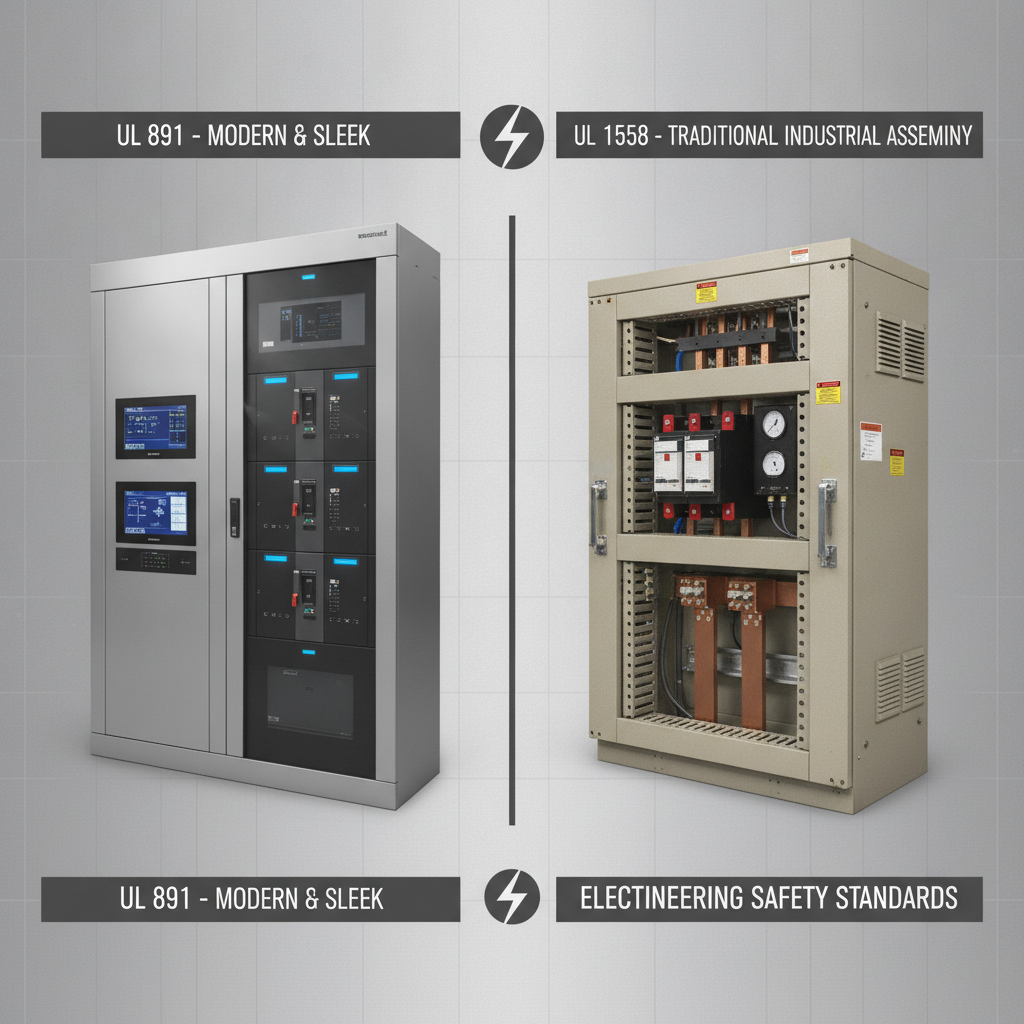
UL 891 vs UL 1558 - Which Standard Applies
When specifying or purchasing switchboards or switchgear for commercial or industrial electrical systems, understanding the difference between UL 891 and UL 1558 - which standard applies - is critical for compliance, safety, and operational reliability. These two UL standards define the construction, performance, and testing requirements for low-voltage power distribution equipment in the United States. Selecting the correct standard impacts not only regulatory approval but also the long-term performance and maintainability of your electrical infrastructure. In this article, we break down the key differences, application scenarios, and decision factors so you can make an informed choice for your next project. Whether you are a small business owner, a developer, or a facility manager, mastering the essentials of UL 891 vs UL 1558 - which standard applies - will help you specify the right equipment and avoid costly mistakes.
UL 891 vs UL 1558 - Which Standard Applies
UL 891 and UL 1558 are both Underwriters Laboratories (UL) standards for low-voltage switchboards and switchgear, but they apply to different types of equipment and installation scenarios. UL 891 covers switchboards, which are typically used for general-purpose power distribution in commercial and light industrial settings. UL 1558, on the other hand, applies to metal-enclosed low-voltage power circuit breaker switchgear, commonly used in larger facilities or where high reliability and maintainability are required. The choice between UL 891 vs UL 1558 - which standard applies - depends on your project's voltage, current, and operational needs. For general distribution, UL 891 is often sufficient, while critical applications with higher fault current demands may require UL 1558 compliance. To learn more about how these standards impact your equipment selection, read on. For additional details, learn more.
UL 891 vs UL 1558 - Ensuring the Right Fit for Your Project
Choosing between UL 891 and UL 1558 - which standard applies - can streamline your project approval and ensure your electrical system meets all safety and performance requirements. UL 891 switchboards are generally more compact, cost-effective, and easier to install, making them ideal for commercial buildings, retail centers, and small industrial applications. UL 1558 switchgear, by contrast, offers enhanced arc flash protection, front-accessible maintenance, and higher interrupt ratings, which are essential for mission-critical environments such as hospitals, data centers, and manufacturing plants. Understanding the benefits of each standard helps you avoid over- or under-specifying equipment, saving both time and money. For a detailed UL 891 vs UL 1558 comparison, keep reading the following sections. For additional details, see UL 891 vs UL 1558 comparison.
How to Decide: UL 891 vs UL 1558 - Which Standard Applies?
To decide whether UL 891 or UL 1558 - which standard applies - you must evaluate your facility’s voltage, current, and operational requirements. UL 891 is typically specified for systems up to 600V and 6000A, with molded-case circuit breakers and fusible switches. UL 1558 is required when using power circuit breakers, higher fault current ratings, or when enhanced safety and maintainability are priorities. Key decision points include the type of overcurrent protection, accessibility, arc flash mitigation, and the need for draw-out breakers. Consulting with a qualified engineer or supplier ensures compliance with the National Electrical Code (NEC) and local authorities. For questions about electrical standards and which UL listing fits your project, reach out to our team today. For additional details, see electrical standards.
Understanding UL 891: The Switchboard Standard
UL 891, titled "Dead-Front Switchboards," is the primary standard for low-voltage switchboards in commercial and light industrial applications. Switchboards are assemblies of switches, overcurrent protection devices, and bus bars, designed for distributing electrical power. UL 891 requires rigorous testing for short-circuit withstand, temperature rise, dielectric strength, and mechanical durability. Typical UL 891 switchboards use molded-case circuit breakers or fusible switches and are available in ratings up to 600V and 6000A. They are generally front-accessible, with dead-front construction to enhance operator safety. UL 891-compliant switchboards are widely used in office buildings, retail centers, and small factories due to their compact footprint, modularity, and cost-effectiveness. Understanding the limitations and capabilities of UL 891 is essential for specifying the right equipment for your project.
Exploring UL 1558: The Switchgear Standard
UL 1558, titled "Metal-Enclosed Low-Voltage Power Circuit Breaker Switchgear," governs the construction and testing of switchgear assemblies using power circuit breakers. These systems are engineered for high reliability, maintainability, and enhanced safety, often required in mission-critical environments. UL 1558 switchgear features draw-out power circuit breakers, arc-resistant construction, and robust barriers for operator protection. The standard mandates extensive testing for short-circuit withstand, temperature rise, and interlocking mechanisms. UL 1558 equipment is typically rated up to 600V and 10,000A, with interrupting ratings as high as 200kA. Applications include hospitals, data centers, and large manufacturing plants where downtime must be minimized and maintenance performed safely. Specifying UL 1558 ensures compliance with the most demanding operational and safety requirements in the industry.
Key Differences Between UL 891 and UL 1558
While both standards address low-voltage power distribution, UL 891 and UL 1558 differ in construction, performance, and application. UL 891 switchboards use molded-case breakers and are typically front-access only, while UL 1558 switchgear uses draw-out power circuit breakers and provides full front and rear access. UL 1558 assemblies are generally larger, heavier, and more expensive, but offer higher interrupt ratings and enhanced arc flash mitigation. The choice impacts not only compliance but also operational flexibility, maintenance procedures, and total cost of ownership. Understanding these differences helps ensure you specify the right product for your facility’s needs, balancing safety, reliability, and budget.
Table: UL 891 vs UL 1558 at a Glance
| Feature | UL 891 | UL 1558 |
|---|---|---|
| Typical Applications | Commercial, Light Industrial | Critical Facilities, Heavy Industrial |
| Breaker Type | Molded-Case, Fusible | Power Circuit Breaker (Draw-Out) |
| Voltage/Current Ratings | Up to 600V/6000A | Up to 600V/10,000A |
| Arc Flash Protection | Basic | Enhanced |
| Maintenance Access | Front Only | Front and Rear |
| Cost | Lower | Higher |
This table summarizes the main differences between UL 891 and UL 1558, helping you quickly identify which standard aligns with your facility’s requirements. Use it as a reference when discussing specifications with your engineering team or supplier.
Compliance and Regulatory Considerations
Compliance with UL 891 or UL 1558 is not just a matter of preference; it is often mandated by the National Electrical Code (NEC) and enforced by local authorities having jurisdiction (AHJs). UL 891 is referenced in NEC Article 408, while UL 1558 is referenced for switchgear in Article 110 and Article 240. Selecting the wrong standard can result in failed inspections, costly rework, or insurance issues. Always confirm the required UL listing with your design engineer and AHJ before finalizing equipment orders. Documentation, labeling, and field evaluation are critical for passing inspections and ensuring ongoing safety. Staying current with code updates and standard revisions is essential for long-term compliance.
Cost, Lead Time, and Maintenance Implications
UL 891 switchboards are generally less expensive and have shorter lead times than UL 1558 switchgear, due to simpler construction and broader availability. However, UL 1558 equipment, while more costly and requiring longer procurement cycles, offers significant benefits in terms of maintainability, safety, and system uptime. Power circuit breakers in UL 1558 assemblies can be serviced or replaced without de-energizing the entire system, minimizing downtime. Consider total cost of ownership, including installation, maintenance, and potential operational interruptions, when selecting between UL 891 and UL 1558. Engage with your supplier early to plan for realistic lead times and ensure all project milestones are met.
Practical Checklist: Choosing the Right Standard
- Assess system voltage and current requirements.
- Determine the type of overcurrent protection needed (molded-case vs. power circuit breaker).
- Evaluate maintenance and safety needs (arc flash protection, draw-out breakers).
- Review NEC and local code requirements for UL listing.
- Consult with your engineering team and AHJ.
- Balance initial cost with long-term operational needs.
Using this checklist will help you systematically determine whether UL 891 or UL 1558 - which standard applies - to your specific project, reducing risk and ensuring compliance.
Expert Support for UL 891 and UL 1558 Projects
Specifying the correct standard for your switchboard or switchgear project can be complex, especially when balancing code compliance, safety, cost, and operational needs. Working with an experienced supplier or engineering consultant ensures you receive the right guidance at every stage, from design to installation and inspection. Our team at Advance Switchboard Distribution, LLC has deep expertise in UL 891 and UL 1558 applications and can help you navigate the technical and regulatory landscape. Reach out for tailored advice and support on your next electrical distribution project.
Key Takeaways
Deciding between UL 891 vs UL 1558 - which standard applies - is a foundational step in specifying safe and compliant electrical distribution systems for commercial and industrial facilities. UL 891 is typically the standard for general-purpose switchboards, offering cost-effective and compact solutions for most commercial applications. UL 1558 is reserved for critical environments where reliability, maintainability, and enhanced safety are paramount. Your choice should be guided by system requirements, code compliance, and operational priorities. By understanding the differences, consulting with experts, and following a structured decision process, you can ensure your project is built on a solid foundation. For further guidance or to discuss your specific needs, contact our team for personalized support and solutions.