

The Number That Can Shut Down a Project
Electrical equipment must handle fault conditions in a power system. That’s where Short-Circuit Current Rating (SCCR) comes in.
SCCR defines the maximum fault current an assembly can withstand during a short circuit. Matching that rating to available fault current is essential for safety and code compliance.
What SCCR Represents
When a fault occurs, current spikes instantly. Equipment must withstand that surge long enough for protective devices to clear it.
SCCR reflects that capability and is influenced by:
• Internal components
• Overcurrent protection
• Bus construction
• Assembly design
Code and Terminology
The National Electrical Code (NEC 110.10) requires equipment to be rated for available fault current. If it’s not, it becomes a compliance issue, not just a design concern.
AIC (amp interrupting capacity or kAIC) is often discussed alongside SCCR. While sometimes used interchangeably, they refer to different things—SCCR applies to full assembly while AIC/kAIC applies to individual devices like breakers.
The system rating must account for both.
Why This Matters on the Job
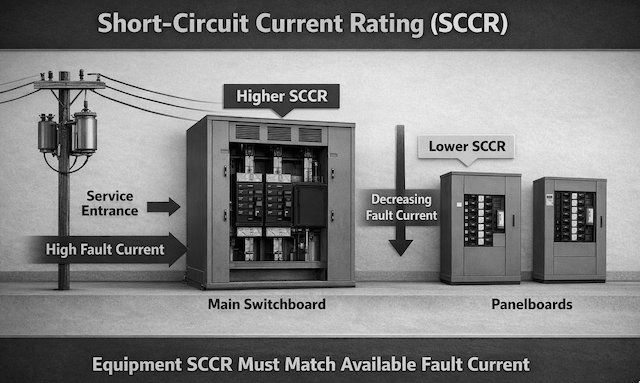
Fault current is highest near the service entrance and decreases as power moves through the building.
• Switchboards typically require higher SCCR
• Panelboards further downstream may require lower ratings
Mismatches usually surface during submittal review or inspection, when changes are harder and more expensive to make.
Bottom Line
SCCR is a small detail that can delay a project. Checking it early helps ensure compliance, supports safe operation, and keeps installation and inspection moving.