

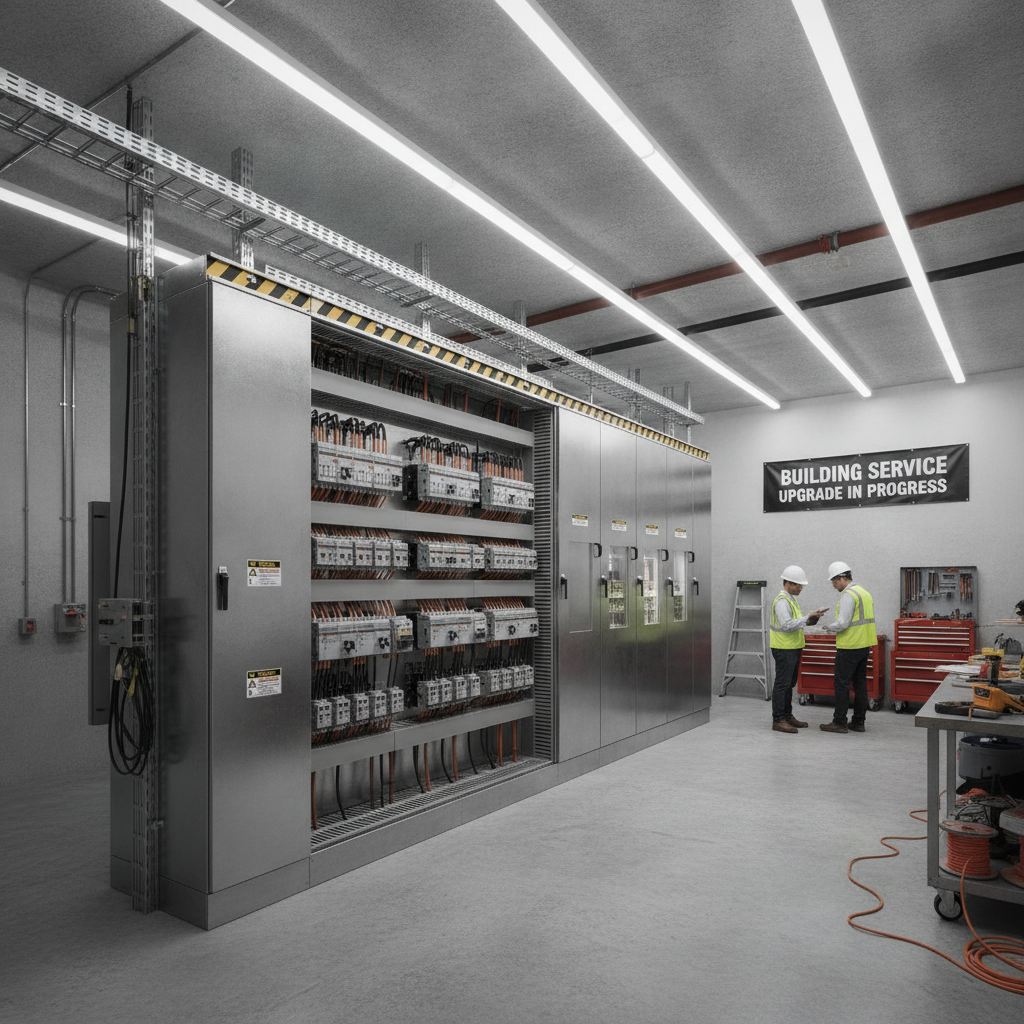
Switchboard for a Building Service Upgrade to 2000A / 3000A / 4000A
Upgrading a building’s electrical service to 2000A, 3000A, or even 4000A is a significant investment that impacts safety, capacity, and long-term operational flexibility. For commercial property owners, developers, and professional buyers, understanding the requirements and best practices for selecting a switchboard for a building service upgrade to 2000A / 3000A / 4000A is essential. This process is governed by strict standards and involves complex design and coordination with utilities, engineers, and installation teams. In this guide, we’ll break down what you need to know, from compliance and sizing to enclosure options and future-proofing, so you can make informed decisions and ensure a smooth upgrade process. Whether you’re planning a new build or retrofitting an existing facility, a properly specified switchboard is the backbone of your electrical infrastructure. Let’s explore the key considerations, technical details, and practical steps to ensure your upgrade delivers safety, reliability, and value for years to come.
Switchboard for a Building Service Upgrade to 2000A / 3000A / 4000A
A switchboard for a building service upgrade to 2000A / 3000A / 4000A is a heavy-duty, engineered assembly designed to safely distribute high-capacity electrical power throughout a commercial or industrial facility. These switchboards are custom-built to meet project-specific requirements, adhering to UL 891 and NEC Article 408 standards. They serve as the central point for incoming utility power, providing overcurrent protection, metering, and distribution for downstream loads. When planning a service upgrade to these amperages, it’s critical to select a switchboard that matches the building’s load profile, future expansion plans, and utility requirements. For more information on enclosure options for these high-capacity switchboards, visit our site. For additional service details and local availability, readers can visit our site.
Benefits of Upgrading to a 2000A / 3000A / 4000A Switchboard
Upgrading to a 2000A, 3000A, or 4000A switchboard enables businesses to support larger loads, integrate advanced equipment, and accommodate future expansion. The main benefits include improved electrical reliability, enhanced safety with modern protection devices, and compliance with current codes. High-capacity switchboards also allow for better load management and can support backup power integration. For facilities with growing electrical demands, these upgrades reduce the risk of overloads and unplanned outages. To explore compliant switchboard solutions for large buildings, review the latest UL 891-certified options. For related information, see switchboard solutions for large buildings.
How to Specify a Switchboard for a Building Service Upgrade
To specify a switchboard for a building service upgrade to 2000A / 3000A / 4000A, start by analyzing the building’s total load, future growth projections, and utility requirements. Work with a licensed electrical engineer to determine the required main breaker size, short-circuit rating, and distribution configuration. Confirm the switchboard’s compliance with UL 891 and NEC Article 408, and select features such as metering, surge protection, and communication interfaces as needed. For end-to-end support and product selection, consult with Advance Switchboard Distribution for expert guidance and tailored solutions. For related information, see Advance Switchboard Distribution.
Key Standards for High-Amperage Switchboards
Switchboards rated at 2000A, 3000A, or 4000A must comply with several primary standards to ensure safety and reliability. UL 891 is the governing standard for dead-front switchboards, specifying construction, testing, and performance requirements. The National Electrical Code (NEC), particularly Article 408, outlines installation, grounding, and overcurrent protection rules. Utility companies may impose additional requirements for metering and service entrance equipment. For commercial projects, adherence to these standards is non-negotiable and should be verified during both design and commissioning. To verify a manufacturer’s credentials, check for UL listings and request documentation during procurement.
Sizing Considerations for 2000A / 3000A / 4000A Switchboards
Accurate sizing of a switchboard for a building service upgrade to 2000A / 3000A / 4000A is essential for safety and performance. Sizing must account for the building’s peak load, diversity factor, and any planned future expansions. The main breaker and busbar ratings should match or exceed the utility service size. Consideration must also be given to short-circuit current ratings (SCCR), which depend on the available fault current at the service entrance. Oversizing can increase costs unnecessarily, while undersizing risks overloads and code violations. Engage an experienced engineer to perform a detailed load calculation and coordinate with the utility provider for service entrance requirements.
Enclosure Types and Environmental Protection
The enclosure type for a high-amperage switchboard is determined by the installation environment. NEMA 1 enclosures are suitable for indoor, dry locations, while NEMA 3R enclosures provide weather protection for outdoor installations. Selection should consider exposure to dust, moisture, and potential physical impacts. For specialized environments, such as corrosive or hazardous areas, consult the manufacturer for custom enclosure solutions. Proper enclosure selection not only protects the switchboard but also ensures compliance with safety codes and prolongs equipment life. Always verify that the enclosure rating matches the project’s environmental requirements and local code mandates.
Coordination with Utilities and Permitting
A successful building service upgrade to 2000A, 3000A, or 4000A requires early and ongoing coordination with the local utility provider. Utilities set requirements for service entrance equipment, metering, and connection points. Submit switchboard specifications and drawings for utility approval before procurement. The permitting process involves detailed documentation, including load calculations, one-line diagrams, and equipment data sheets. Delays in utility coordination can impact project timelines, so engage utility representatives early and maintain clear communication throughout the project. Ensure all switchboard equipment is approved before installation to avoid costly rework or compliance issues.
Installation Best Practices for High-Capacity Switchboards
Installing a switchboard for a building service upgrade to 2000A / 3000A / 4000A demands precision and adherence to safety standards. Only qualified electricians should perform the installation, following the manufacturer’s instructions and all applicable codes. Key steps include verifying clearances, grounding the switchboard per NEC Article 250, and torqueing connections to specification. Inspections should be conducted at each stage, including pre-energization checks for proper phasing, labeling, and insulation resistance. Document all test results and maintain records for future reference. Proper installation ensures long-term reliability and minimizes the risk of electrical faults or hazards.
Maintenance and Testing Requirements
Ongoing maintenance is critical for switchboards rated at 2000A, 3000A, or 4000A. Regular inspections should include visual checks for signs of overheating, corrosion, or loose connections. Periodic testing of protective devices, such as circuit breakers and ground fault protection, is required to ensure proper operation. Infrared thermography can help detect hot spots before they become failures. Cleaning and tightening connections, as well as updating labels and documentation, are part of a comprehensive maintenance plan. Follow the manufacturer’s recommended schedule and document all maintenance activities to support warranty claims and regulatory compliance.
Future-Proofing Your Electrical Infrastructure
When upgrading to a 2000A / 3000A / 4000A switchboard, consider features that support future expansion and technology integration. Options such as modular busways, spare breaker spaces, and advanced metering allow for easier upgrades as your facility grows. Communication interfaces for building management systems (BMS) and remote monitoring add value and operational insight. Investing in scalable switchboard solutions reduces future retrofit costs and ensures your infrastructure can adapt to evolving needs. Consult with your design team and manufacturer to specify options that align with your long-term business objectives and anticipated growth.
Sample Specification Table for High-Amperage Switchboards
| Feature | 2000A | 3000A | 4000A |
|---|---|---|---|
| UL Standard | UL 891 | UL 891 | UL 891 |
| Voltage (max) | 600V | 600V | 600V |
| SCCR (min) | 65 kA | 65 kA | 100 kA |
| Enclosure Type | NEMA 1 / 3R | NEMA 1 / 3R | NEMA 1 / 3R |
| Main Breaker | 2000A | 3000A | 4000A |
| Metering | Optional | Optional | Optional |
| Dimensions (typ.) | Varies by config | Varies by config | Varies by config |
Partnering with the Right Manufacturer
Choosing a reputable manufacturer is essential for a successful switchboard upgrade. Look for companies with a proven track record in high-amperage switchboards, robust engineering support, and strong after-sales service. Evaluate their certifications, customization capabilities, and references from similar projects. A qualified manufacturer will assist with technical submittals, utility coordination, and field support during installation and commissioning. For a trusted partner with national reach, consider Advance Switchboard Distribution, LLC for your next project.
The Bottom Line
A switchboard for a building service upgrade to 2000A / 3000A / 4000A is a cornerstone investment in your facility’s electrical infrastructure. By understanding the technical requirements, compliance standards, and best practices outlined above, you can ensure a safe, reliable, and scalable solution. Work closely with your engineering team, utility provider, and a qualified manufacturer to specify, procure, and install the right switchboard for your needs. Prioritize future-proofing and ongoing maintenance to maximize the value of your investment. For tailored solutions and expert support, connect with industry leaders who specialize in high-capacity switchboards. Your building’s power needs are evolving, make sure your electrical backbone is ready for the challenge.