

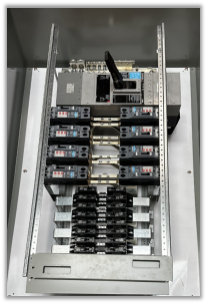
What Does It Take for a Panelboard to Meet UL 67?
Panelboards are used throughout a building, so it’s easy to think of them as standard equipment. But for a panelboard to be installed in commercial distribution, it must meet specific safety and construction requirements defined by UL 67.
For a panelboard to carry a UL 67 listing, the entire assembly must be designed, tested and evaluated to confirm it can safely distribute power under real operating conditions.
What UL 67 Evaluates
UL 67 establishes the requirements for panelboards used to distribute power within a building. The standard evaluates how the equipment performs under conditions the system may experience over time.
Testing focuses on areas such as:
• Electrical spacing and insulation
• Mechanical strength of the enclosure
• Compatibility with circuit breakers
• Heat generated during operation
• Overall construction of the assembly
These evaluations confirm that the panelboard can safely distribute power to branch circuits while maintaining the integrity of the electrical system.
Why This Matters on the Job
UL listings often come up during equipment review or inspection. Inspectors want to confirm that installed equipment meets the standard required for its role in the system.
When a panelboard carries a UL 67 listing, it verifies that the equipment has been tested for the electrical and mechanical demands of building distribution.
If a panelboard does not meet the correct listing, the issue usually surfaces during inspection. That’s when equipment swaps, delays or redesign discussions can start.
Understanding the standard behind the equipment helps contractors confirm compliance before installation begins and avoid those problems later in the project.
Bottom Line
Confirming equipment standards early helps prevent problems later during installation and inspection.