

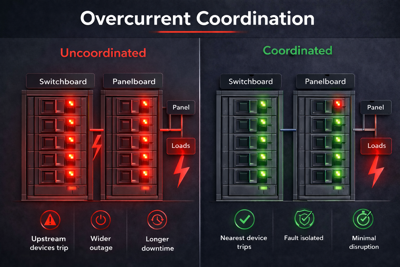
Overcurrent Coordination: Making Sure the Right Device Trips First
Overcurrent protection is meant to isolate a problem—not shut down more of the system than necessary.
That comes down to coordination. Breakers and fuses need to be selected and set up so the device closest to the fault clears it first. When that doesn’t happen, a small issue can trip upstream devices and take out more equipment than intended.
Selective Coordination vs. Nuisance Tripping
Selective coordination—where only the device closest to the fault trips—keeps the impact contained and the rest of the system running. Without it, nuisance tripping can occur. In other words, devices operate out of sequence or trip unnecessarily, which then shuts down more of the system than required.
When coordination is off, multiple devices may trip at once. Outages spread and troubleshooting can take longer.
Why Coordination Matters
Coordination ties directly into equipment selection, including switchboards, panelboards and feeder design. Waiting until late in the project usually leads to adjustments, delays or rework.
Plan coordination early to:
- Keep the rest of the system running during a fault
- Reduce callbacks and troubleshooting time
- Support safer operation under load conditions
Reading Time-Current Curves
Time-current curves show how quickly breakers and fuses respond at different fault levels. When curves are aligned properly, downstream devices trip first. If they overlap too much, upstream devices can trip early and defeat the purpose of coordination.
The National Electrical Code requires selective coordination in certain applications so that a fault is cleared by the device closest to it, instead of shutting down larger portions of the system. This is especially important for systems where power continuity matters, like emergency power, legally required standby systems, healthcare facilities, elevators, and critical operations.
Bottom Line
Practical planning upfront makes installation, coordination and long-term use more predictable.