

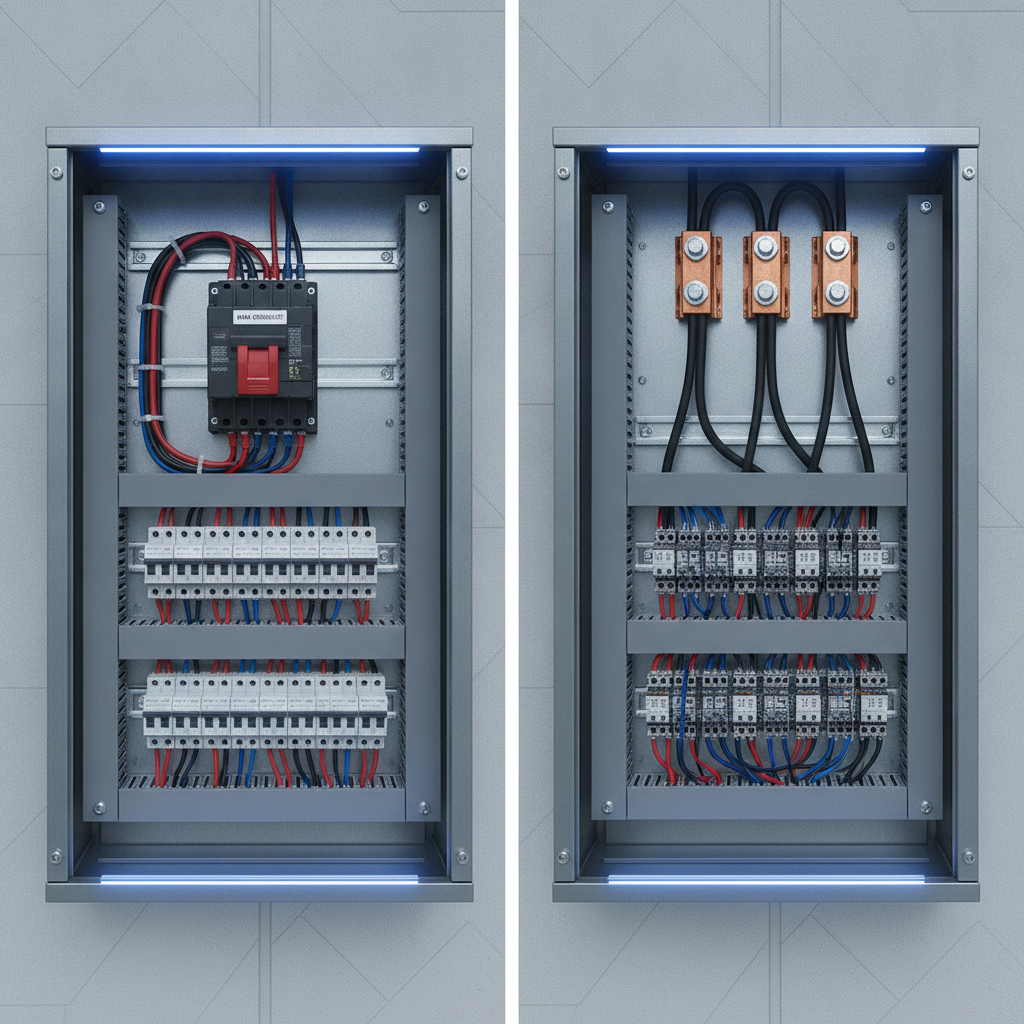
Main Breaker vs Main Lug Switchboard Configurations
For commercial and industrial facilities, selecting the right switchboard configuration is a foundational decision that impacts safety, scalability, and long-term operational efficiency. Among the most common choices are main breaker and main lug switchboard configurations. Understanding the differences between these two approaches is essential for small business owners, developers, and facility managers who want to ensure code compliance, optimal protection, and future-ready infrastructure. In this comprehensive guide, we break down the key distinctions, benefits, and practical considerations of main breaker vs main lug switchboard configurations. Whether you are planning a new build, upgrading an existing system, or simply seeking to enhance your knowledge, this article delivers authoritative, actionable insights to help you make the best decision for your business. We’ll also reference relevant standards such as UL 891 and NEC Article 408, and provide practical checklists and tables to clarify your options. By the end, you’ll be equipped to confidently specify or evaluate the right switchboard configuration for your facility’s needs.
Main Breaker vs Main Lug Switchboard Configurations Explained
The main breaker vs main lug switchboard configurations decision is a critical step in electrical system design. A main breaker switchboard includes a primary overcurrent protection device (the main breaker) that disconnects all power to the switchboard, providing a single point of shutoff in emergencies. In contrast, a main lug switchboard does not have a main breaker; instead, it relies on upstream protection, typically from a main breaker in a separate panel or switchgear. This distinction affects not only protection and code compliance but also maintenance and expansion capabilities. For facilities that require a clear, local means of disconnect, main breaker configurations are often preferred. However, main lug switchboards can be more cost-effective and allow for easier parallel feeds in certain applications. To stay updated on industry trends and best practices for main breaker vs main lug switchboard configurations, consult trusted sources and manufacturers. For related information, see main breaker vs main lug switchboard configurations.
Benefits of Choosing the Right Main Breaker vs Main Lug Switchboard Configurations
Selecting the optimal main breaker vs main lug switchboard configurations can deliver significant advantages for your facility. The right choice enhances electrical safety, supports future expansion, and can streamline maintenance procedures. Main breaker switchboards provide immediate local disconnect, which is crucial for emergency response and maintenance isolation. Main lug configurations, on the other hand, can reduce initial costs and simplify the integration of multiple power sources. By aligning your switchboard configuration with your facility’s operational needs, you ensure compliance with UL 891 and NEC Article 408, while also optimizing for reliability and scalability. For detailed technical specifications and available switchboard configurations, consult product documentation and certified manufacturers. For related information, see switchboard configurations.
How to Decide Between Main Breaker and Main Lug Switchboard Configurations
When choosing between main breaker and main lug switchboard configurations, start by assessing your facility’s protection requirements, code obligations, and operational preferences. Consider whether your application demands a local means of disconnect for safety or maintenance. Review the upstream protection available and evaluate how future expansions or parallel feeds might impact your system. Consulting with experienced manufacturers like Advance Switchboard Distribution, LLC can provide valuable guidance. Always reference the latest editions of UL 891 and NEC Article 408 to confirm compliance. Document your requirements and consult with your electrical engineer to ensure the selected configuration aligns with both immediate and long-term operational goals.
Key Differences Between Main Breaker and Main Lug Switchboards
The primary difference between main breaker and main lug switchboard configurations lies in the presence or absence of a main overcurrent protection device. Main breaker switchboards feature an integrated breaker that can disconnect all downstream circuits, providing a clear point of isolation and enhancing safety. Main lug switchboards, by contrast, do not have a main breaker and depend on upstream overcurrent protection, which is typically located in a separate panel or switchgear. This impacts not only the method of shutdown but also how maintenance and emergency procedures are handled. Understanding these differences is essential for ensuring your electrical system meets both operational and regulatory requirements.
When to Use a Main Breaker Switchboard
A main breaker switchboard is best suited for facilities that require a local means of disconnect, such as standalone buildings, critical infrastructure, or locations where rapid shutdown is necessary for safety. This configuration is often mandated by code when there is no upstream main breaker within sight or when the switchboard serves as the primary service entrance. The main breaker provides a single point of control, simplifying emergency response and maintenance. It also ensures compliance with NEC Article 230.71, which requires a means of disconnect for service equipment. Main breaker switchboards are commonly used in commercial, industrial, and institutional settings where safety and code compliance are top priorities.
When to Use a Main Lug Switchboard
Main lug switchboards are ideal for applications where overcurrent protection is provided upstream, such as in subpanels or distribution boards that are part of a larger electrical system. This configuration is often used in multi-unit buildings, large campuses, or facilities with multiple distribution points. Main lug switchboards can reduce equipment costs and simplify wiring when a main breaker is not required by code. They are also advantageous when parallel feeds or future expansions are anticipated, as they allow for flexible integration into complex systems. However, it is essential to verify that upstream protection meets all relevant standards, including UL 891 and NEC Article 408.
Code Compliance and Industry Standards
Compliance with industry standards is non-negotiable when selecting main breaker vs main lug switchboard configurations. UL 891 governs the construction and performance of dead-front switchboards, ensuring safety and reliability. NEC Article 408 addresses switchboard installation, wiring, and protection requirements, while Article 230.71 specifies the need for a service disconnect. Always consult the latest versions of these documents to verify that your chosen configuration meets all applicable codes. Engaging a licensed electrical engineer and working with certified manufacturers will help ensure that your installation is both safe and compliant, minimizing risk and liability for your business.
Cost Considerations for Main Breaker vs Main Lug Switchboards
Cost is a significant factor in the decision between main breaker vs main lug switchboard configurations. Main breaker switchboards generally have higher upfront costs due to the inclusion of the breaker and associated hardware. However, they can reduce long-term expenses by simplifying maintenance and minimizing downtime during emergencies. Main lug switchboards are typically less expensive initially, but may require additional upstream protection, which can offset some of the savings. When evaluating costs, consider not only the price of equipment but also installation, maintenance, and compliance expenses. A total cost of ownership approach ensures you select the configuration that delivers the best value for your facility.
Installation and Maintenance Best Practices
Proper installation and maintenance are crucial for both main breaker and main lug switchboards. Follow manufacturer guidelines and ensure all work is performed by qualified personnel. For main breaker switchboards, verify that the breaker is correctly rated for the system’s voltage and current requirements. For main lug configurations, double-check that upstream protection is adequate and accessible. Routine inspections should include checking for loose connections, signs of overheating, and verifying that all labeling is clear and up to date. Document all maintenance activities and keep records in accordance with NEC Article 408.4. Adhering to best practices reduces the risk of failures and extends the lifespan of your switchboard equipment.
Checklist: Selecting the Right Switchboard Configuration
- Determine if a local means of disconnect is required by code or operational policy.
- Assess the availability and adequacy of upstream overcurrent protection.
- Consider future expansion needs and parallel feed requirements.
- Evaluate total cost of ownership, including equipment, installation, and maintenance.
- Consult UL 891, NEC Article 408, and other relevant standards.
- Engage a qualified electrical engineer and certified manufacturer.
Comparison Table: Main Breaker vs Main Lug Switchboards
| Feature | Main Breaker | Main Lug |
|---|---|---|
| Overcurrent Protection | Integrated main breaker | Upstream device required |
| Means of Disconnect | Local shutoff | Remote shutoff |
| Cost | Higher initial cost | Lower initial cost |
| Best For | Standalone buildings, emergency shutoff | Subpanels, multi-unit facilities |
| Code Compliance | Meets NEC 230.71 for service disconnect | Depends on upstream device |
Practical Examples of Main Breaker vs Main Lug Applications
Consider a small business with a standalone retail building. Here, a main breaker switchboard is typically required to provide a local means of disconnect, ensuring quick isolation during maintenance or emergencies. In contrast, a large office complex with multiple wings may utilize main lug switchboards for each wing, relying on a central main breaker upstream. This approach reduces equipment costs and simplifies the distribution system. Another example is a manufacturing plant with future expansion plans; main lug switchboards allow for easier integration of new feeds without major reconfiguration. Understanding these real-world scenarios can help clarify which configuration best suits your facility’s needs.
Final Thoughts
Choosing between main breaker vs main lug switchboard configurations is a decision that shapes the safety, flexibility, and compliance of your facility’s electrical system. By understanding the differences, benefits, and code requirements, you can make an informed choice that aligns with your operational goals and budget. Always reference UL 891 and NEC Article 408, and collaborate with experienced manufacturers and electrical engineers to ensure your installation is safe, reliable, and future-ready. For ongoing updates on switchboard technology and best practices, stay engaged with industry news and trusted partners. If you are planning a new project or upgrading existing infrastructure, take the time to evaluate your options thoroughly. The right switchboard configuration will support your business’s growth and operational excellence for years to come.