

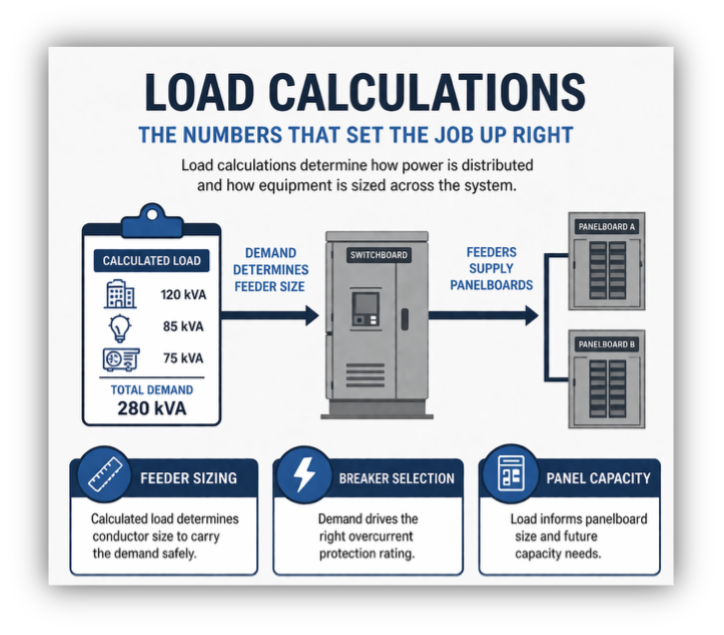
Load Calculations: The Numbers That Set the Job Up Right
Load calculations shape how power is distributed and how equipment is sized across the system.
Load calculations set the foundation for how an electrical system is built and how equipment is selected on the job. Before equipment is chosen, these numbers determine how power will be distributed, how circuits are grouped, and how the system is sized to handle demand.
How Loads Shape the System
Calculated demand influences key parts of the system, including:
- Feeder sizing
- Breaker selection
- Panelboard capacity
These decisions carry through the entire installation. Overestimating increases cost and can lead to oversized equipment. Underestimating creates performance risk and can limit capacity sooner than expected. Accurate load data helps strike the right balance and keeps the system aligned with actual building needs.
Where Coordination Improves
Clear load data helps contractors and engineers stay aligned on equipment sizing, space and layout early.
That alignment helps avoid mid-project changes, reduces the need for field adjustments, and keeps installation moving without rework. It also makes it easier to review drawings, coordinate with other trades, and plan for future expansion.
Bottom Line
When the loads are right from the start, everything downstream gets easier to coordinate and install.