

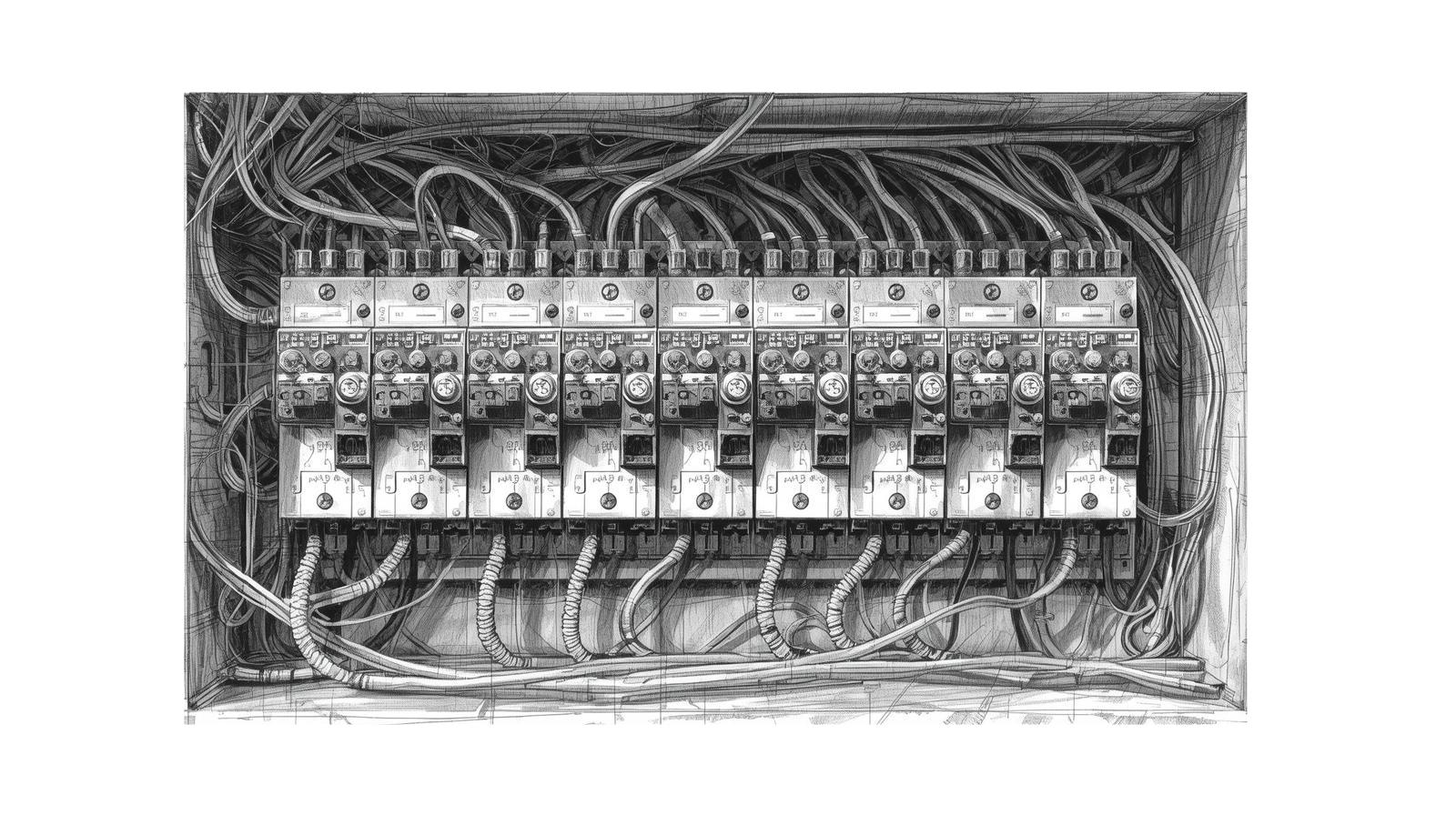
Inside the Panelboard: What Contractors Should Understand Before Inspection
Panelboards are often treated as standard equipment. In reality, what’s inside them directly affects coordination, installation and inspection.
Understanding how a panelboard is built leads to more precise installation decisions and fewer surprises later.
Where Circuits Converge
Power enters the panelboard from a feeder breaker at the switchboard and lands on the bus structure. From there, branch breakers distribute power to lighting, receptacles and equipment.
The internal layout influences conductor routing, breaker selection and available space. When the internal structure is understood early, load distribution and installation sequencing become easier to plan.
Where Problems Surface
Each panelboard supports a specific portion of the building, bringing multiple circuits and coordination decisions into one enclosure.
Because so many circuits converge in one enclosure, missed details tend to surface during inspection or field review.
• Breaker sizing must match calculated loads.
• Conductors must be properly terminated.
• Bonding and grounding must be accurate and compliant.
Why This Matters on the Job
Understanding how distribution is organized inside the panelboard supports more accurate
coordination with engineers, inspectors and installers. It also helps anticipate space constraints,
circuit capacity and compliance requirements before equipment is installed.
Bottom Line
Panelboard details drive coordination. Address them early and problems surface less often later.