

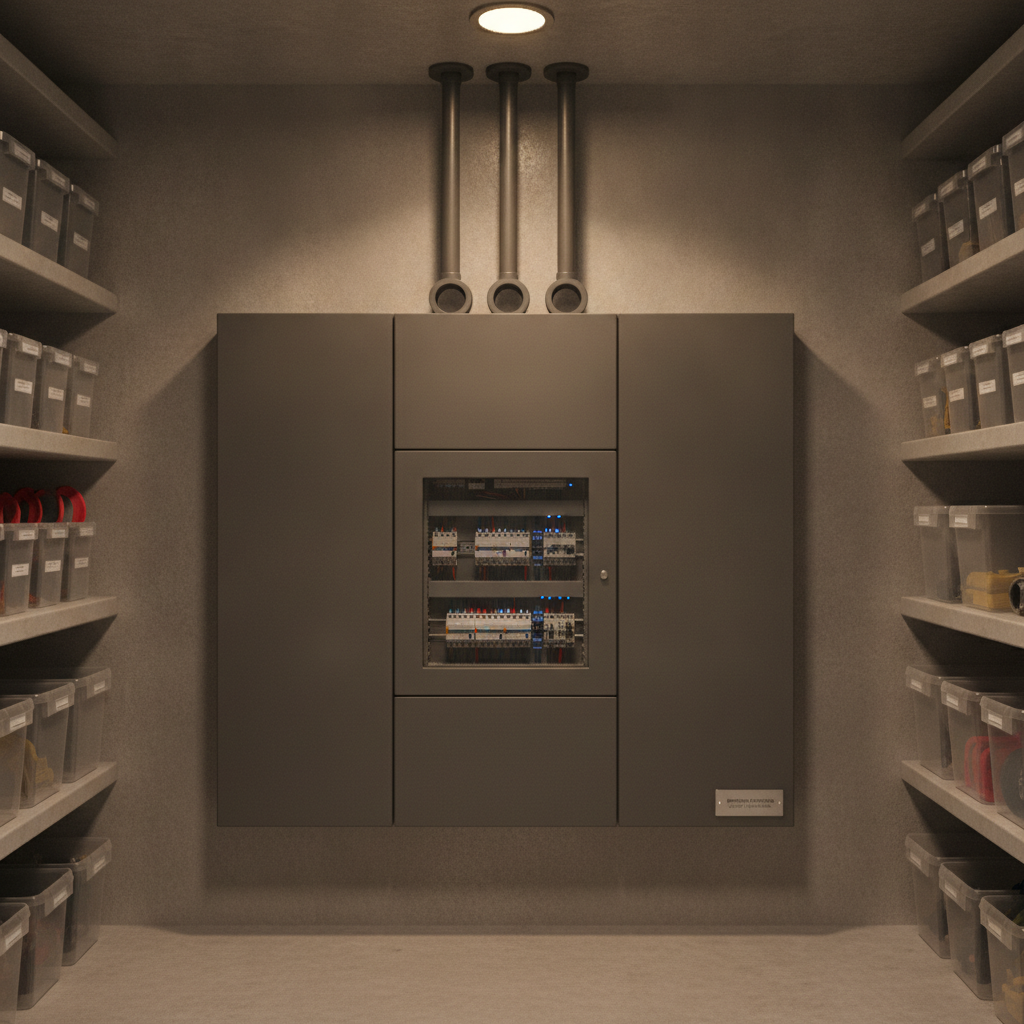
Custom Switchboard to Match Existing Footprint and Conduit Entry
For businesses managing critical infrastructure, upgrading or replacing electrical switchboards is a significant investment. The challenge is even greater when the new equipment must fit precisely into the existing footprint and align with established conduit entry points. A custom switchboard to match existing footprint and conduit entry is often the only practical solution for minimizing downtime, controlling costs, and ensuring compliance with safety standards. In this guide, we’ll answer the most common questions commercial and professional buyers have about specifying, sourcing, and installing these highly customized switchboards. We’ll cover technical requirements, design considerations, compliance standards, and practical steps to ensure a seamless transition, backed by ASD’s expertise in UL 891-compliant low voltage switchboards. Whether you’re a small business owner, developer, or facilities manager, this article will help you make informed decisions that protect your operations and investment.
Custom Switchboard to Match Existing Footprint and Conduit Entry
A custom switchboard to match existing footprint and conduit entry is a purpose-built electrical distribution panel designed to fit precisely into the physical space and conduit layout of your current switchboard installation. This approach allows businesses to upgrade or replace aging or non-compliant equipment without the costly and disruptive process of rerouting conduits or modifying building infrastructure. The process begins with a detailed site assessment, including measurements of the existing footprint, conduit locations, and mounting requirements. The custom switchboard is then engineered to match these specifications, ensuring a seamless fit and straightforward installation. This solution is ideal for facilities where downtime must be minimized and where maintaining the integrity of the building’s electrical system is critical. For more technical details and product options, see custom switchboard to match existing footprint and conduit entry. For additional details, see custom switchboard to match existing footprint and conduit entry.
Benefits of a Custom Switchboard to Match Existing Installations
Choosing a custom switchboard to match existing footprint and conduit entry provides several key advantages for commercial and industrial facilities. First, it eliminates the need for costly demolition or reconstruction of walls, floors, or ceilings to accommodate new electrical gear. Second, it significantly reduces installation time and associated labor costs, as the new switchboard can be swapped in with minimal disruption. Third, it ensures that conduit alignment is preserved, avoiding the risk of code violations or future maintenance headaches. Finally, a custom solution supports ongoing compliance with standards such as UL 891, which governs low voltage switchboards in the United States. For organizations seeking to modernize their power distribution while maintaining operational continuity, a tailored approach is often the most practical and cost-effective path. To explore how ASD can support your project, visit Advance Switchboard Distribution. For additional details, see Advance Switchboard Distribution.
How to Specify a Custom Switchboard for Existing Footprint and Conduit Entry?
To specify a custom switchboard to match existing footprint and conduit entry, start with a comprehensive site evaluation. Measure the exact dimensions of the current switchboard’s enclosure, noting height, width, and depth. Document all conduit entry points, including their size, type, and precise location relative to the enclosure. Record mounting details and any obstructions that could impact installation. It’s also crucial to gather information about the required electrical ratings, such as voltage, amperage, and short-circuit withstand capacity. Provide these details to your switchboard manufacturer, who will use them to design a solution that meets your needs and complies with UL 891. For expert guidance and a proven track record, consider reaching out to Advance Switchboard Distribution, LLC for a consultation.
Key Design Considerations for Custom Switchboards
When designing a custom switchboard to match existing footprint and conduit entry, several critical factors must be addressed. First, the enclosure’s physical dimensions must align exactly with the available space, including any recesses or protrusions. Second, all conduit knockouts and entry points should be positioned to match the existing conduit layout, ensuring a direct and code-compliant connection. Third, internal busbar and component layouts must accommodate the required electrical loads and future expansion needs. Safety is paramount, so the design must comply with UL 891 and the National Electrical Code (NEC) Article 408. Consideration should also be given to accessibility for maintenance, clear labeling, and environmental protection (such as NEMA ratings for dust or moisture resistance). By addressing these design elements, you ensure a smooth installation and long-term reliability for your facility’s power distribution system.
UL 891 Compliance and Industry Standards
Compliance with UL 891 is essential for any custom switchboard to match existing footprint and conduit entry. UL 891 is the primary safety standard for low voltage switchboards in the United States, specifying requirements for construction, performance, and testing. This standard covers aspects such as busbar spacing, short-circuit ratings, insulation, and accessibility. Meeting UL 891 ensures that the switchboard is safe for operation and maintenance, and it is often required by local electrical inspectors and insurance providers. Additionally, compliance with the National Electrical Code (NEC), particularly Article 408, is necessary to ensure proper installation and operation. Working with a manufacturer experienced in UL 891-compliant custom solutions is critical to achieving both safety and regulatory approval for your project.
Common Applications for Custom Switchboards
A custom switchboard to match existing footprint and conduit entry is frequently used in commercial, industrial, and institutional settings where electrical infrastructure upgrades are needed but building modifications are impractical or cost-prohibitive. Typical applications include hospitals, data centers, manufacturing plants, schools, and office buildings. In these environments, the ability to replace outdated or non-compliant switchboards while preserving the original conduit layout is crucial for minimizing operational disruption. Custom switchboards are also ideal for historic buildings, where structural alterations may not be permitted. By providing a tailored solution, businesses can modernize their electrical systems, enhance safety, and support future expansion without extensive downtime or construction.
The Custom Switchboard Design and Manufacturing Process
The process of creating a custom switchboard to match existing footprint and conduit entry involves several stages. First, a detailed site survey is conducted to capture all relevant measurements and specifications. Next, engineers develop a design that aligns with the physical constraints and electrical requirements of the site. This design is reviewed for compliance with UL 891 and NEC standards. Once approved, the switchboard is fabricated using high-quality materials, with all conduit entry points and mounting provisions precisely located. Rigorous quality control and testing are performed before shipment. Finally, the switchboard is delivered for installation, with documentation and support provided to ensure a smooth transition. Throughout the process, clear communication between the client and manufacturer is essential for success.
Installation Best Practices for Custom Switchboards
Proper installation is critical to realizing the benefits of a custom switchboard to match existing footprint and conduit entry. Begin by verifying that the new switchboard’s dimensions and conduit entry points align precisely with the site conditions. Use qualified electricians experienced in switchboard installations and ensure all work is performed in accordance with NEC Article 408 and local codes. Carefully support and secure all conduits to prevent stress on connections. Perform a thorough inspection before energizing the system, checking for proper torque on all connections, correct labeling, and absence of foreign materials. Document the installation for future reference and maintenance. Adhering to these best practices ensures a safe, reliable, and code-compliant power distribution system for your facility.
Cost Factors and Budgeting for Custom Switchboards
Several factors influence the cost of a custom switchboard to match existing footprint and conduit entry. The complexity of the site, number and size of conduits, electrical ratings, and required features (such as metering, surge protection, or special finishes) all play a role. Custom engineering and fabrication typically carry a premium over standard products, but these costs are often offset by savings in labor, reduced downtime, and avoidance of building modifications. It’s important to work closely with your switchboard provider to define project scope and expectations up front. Request detailed quotations and clarify what is included, such as site surveys, drawings, compliance documentation, and factory testing. This approach ensures you receive a solution that meets your needs without unexpected expenses.
Checklist for Specifying a Custom Switchboard
- Measure the existing switchboard’s height, width, and depth.
- Document all conduit entry points and their locations.
- Note mounting details and any site obstructions.
- Specify electrical ratings: voltage, amperage, and short-circuit capacity.
- Identify any special features required (metering, surge protection, etc.).
- Confirm compliance requirements (UL 891, NEC Article 408).
- Request detailed drawings and approval before fabrication.
- Plan for professional installation and commissioning.
| Specification | Details |
|---|---|
| Footprint Dimensions | Custom-matched to existing enclosure (height, width, depth) |
| Conduit Entry Points | Precisely located to match site conduits |
| Electrical Ratings | Voltage, amperage, short-circuit withstand as specified |
| Compliance | UL 891, NEC Article 408 |
| Special Features | Metering, surge protection, custom labeling, NEMA ratings |
| Documentation | Drawings, compliance certificates, installation guides |
Why Partner with an Experienced Custom Switchboard Manufacturer?
Selecting a manufacturer with deep expertise in custom switchboard to match existing footprint and conduit entry projects is vital for success. Experienced providers understand the nuances of site measurements, code compliance, and fabrication tolerances. They offer value-added services such as on-site assessments, detailed design reviews, and comprehensive documentation. In addition, established manufacturers maintain rigorous quality control and testing protocols, ensuring your switchboard meets all safety and performance requirements. By partnering with a proven supplier, you reduce the risk of costly errors, delays, or compliance issues, and gain peace of mind that your investment will deliver long-term reliability and safety for your facility.
Practical Steps to Ensure a Seamless Switchboard Upgrade
To ensure a smooth transition to a custom switchboard to match existing footprint and conduit entry, follow these practical steps: 1) Engage stakeholders early, including facilities staff, electricians, and safety officers. 2) Conduct a thorough site survey and document all requirements. 3) Work closely with your switchboard manufacturer to review designs and approve drawings. 4) Schedule installation during planned downtime or low-load periods to minimize disruption. 5) Prepare for commissioning by verifying all connections and performing functional testing. 6) Maintain clear records of the installation and compliance documentation for future reference. By taking these steps, you can upgrade your facility’s power distribution system with confidence, efficiency, and minimal risk.
The Bottom Line
Upgrading to a custom switchboard to match existing footprint and conduit entry is a strategic investment for any business seeking to modernize its electrical infrastructure while minimizing operational disruption and cost. By focusing on precise measurements, compliance with UL 891 and NEC standards, and partnering with an experienced manufacturer, you can achieve a seamless fit and reliable performance. The process requires careful planning, clear communication, and attention to detail at every stage, from site survey to installation. With the right approach, your facility will benefit from enhanced safety, code compliance, and future-ready power distribution. For tailored solutions and expert support, consult with a trusted provider like ASD to ensure your next switchboard project delivers maximum value and peace of mind.